
Water Quality a Number One Priority
One of the FLCA”s greatest concerns is the protection of the quality of water in Farlain Lake.
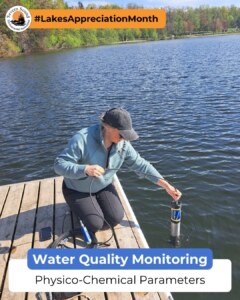
The FLCA participates in two water sampling campaigns, the Federation of Tiny Township Shoreline Associations (FoTTSA) and the Lake Partner Program through the Federation of Ontario Cottagers’ Association (FOCA). There is no cost for participation in the Lake Partner program while there is a nominal fee for the analysis of samples through the FoTTSA program which is paid by the FLCA. In addition, Farlain Lake is one of the inland lakes the Severn Sound Environmental Association (SSEA) monitors.
This monitoring through participation in these programs and the ongoing communication with members of the community ensures that the health of Farlain Lake is maintained and remains below the limits outlined by the province. The good news is that up to date, water quality results for Farlain Lake have been within provincial guidelines.
Lake Partner Program
 The Lake Partner Program sampling campaign runs every year and collects monthly samples from May to October for phosphorus, calcium and average water transparency, all of which are important indicators of the overall lake health. Phosphorus (P) is an essential nutrient for all aquatic organisms however, excess P can cause algae blooms (green-ish, thick scum). Algae blooms are harmful to human and lake health, as these blooms decrease dissolved oxygen, block sunlight penetrating the water and release toxic chemicals as they grow. Excess P typically comes from human impacts/activities such as septic systems, fertilizers, laundry detergents and wastewater treatment plants (and many more). Calcium is essential for aquatic species that have calcium-rich body coverings (typically smaller organisms) which are an important food source for fish and birds. Water transparency measures the depth at which light can penetrate the lake which affects all lake organisms. Changes in light penetration can be related to organic content, invasive species, biological activity, algae growth or increased sediment.
FoTTSA Program
 The FoTTSA sampling campaign runs for 9 weeks every other year and measures E.coli levels and occurs every other year (sampling will take place this year 2024). E.coli is an important indicator of lake health, as its presence indicates the potential presence of fecal pathogens. E.coli originates from many natural organic sources (such as water fowl) but can also be sourced from sewage, septic systems and agricultural runoff. While it is completely normal for E.coli to be present in lake systems, levels exceeding provincial guidelines can cause illnesses in humans and is critical to monitor for the safety of lake residents (not the case at Farlain).
Sampling for these two programs is undertaken each year by an FLCA volunteer, who is the key FLCA contact for both programs. Questions can be forwarded to the FLCA general email box at inquiries@farlainlake.ca.
For more information on the sampling campaigns:
Lake Partner Program (through FOCA): https://foca.on.ca/lake-partner-program/
FoTTSA: https://www.tinycottager.org/fottsa-volunteer-water-sampling-program/
SSEA Inland Lake Monitoring Program
 |
 Farlain Lake Summary 2025 |
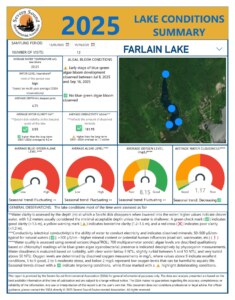
A new program for monitoring the quality of water in inland lakes within the Severn Sound watershed was initiated by SSEA in the summer of 2025. SSEA staff took samples from three locations on Farlain Lake on a monthly basis from May through October and posted a report on the SSEA web site [https://www.severnsound.ca/programs-projects/monitoring/severn-sound-inland-lakes/inland-lakes/]. Signs were posted by the Township at the boat launch and north end of the lake showing a QR code that members of the community were able to use to access the reports immediately each month. The image shown here represents a summary of the reports generated over the summer.
Well Water Testing
If you rely on a private water source, such as a well, cistern or treated lake water, your water quality can change over time. Regular testing is the best way to ensure your drinking water remains safe and ultimately helps protect the lake as well.
For information on how to get your well water tested, please see the Simcoe Muskoka District Health web site under Safe Water. Please note that Simcoe Muskoka District Health does not actually test samples or provide results. It helps collect and deliver samples to the Ontario Public Health Lab which is a separate agency. Public Health Ontario has now launched an online Water Testing Portal – please check it out.
Water is tested for the bacterial indicators of contamination, E. coli and total coliforms.
Sample bottles can be picked up and dropped off at the Simcoe Muskoka District Health Unit in Midland:
Simcoe Muskoka District Health Unit Midland Branch
925 Hugel Ave., Unit A, Midland
(Located at the far end of the Midland Secondary School Building)
See web site for available times.
Samples must be kept refrigerated or on ice until ready for drop off which must be within 48 hours of taking the sample. Visit Public Health Ontario for more information about how to get your results, understand your results and what to do next. If you would like to speak to a public health inspector about your results please call Health Connection at 705-721-7520 or 1-877-721-7520, Monday to Friday, 8:30 a.m. to 4:30 p.m.